Forum Replies Created
- AuthorPosts
Neoliberalism as a development model of capitalist accumulation has deepened the relations of domination that reinforce patriarchy and marginalization of millions of people, mostly women.

In Colombia, the consequences have been severe, with negative effects on the lives and rights of women, because the humanitarian crisis in Colombia as a result of the social and armed conflict, has led to increased vulnerability conditions for them, vulnerabilities which they have been used by the private sector and governments to advance the deepening of the neoliberal model.
Not only has used the armed conflict as an argument to discredit and stigmatize social protest has also been systematically murdered union, defenders human rights leaders, social leaders, which weakened organizational processes. With this, terror among those who tried to exercise the right to social and political participation and social protest was generated. Colombia is one of the most dangerous places to be a trade unionist or human rights advocate countries.
Forzado1 displacement is part of the result of the barbarism of the Colombian ruling class has used state terrorism to release land to implement its policy. With neoliberalism transnational corporations continue to use paramilitary groups for the same purpose. In addition to stripping the land to peasant communities disarticulation of rural, necessary organizational processes generated to face economic globalization, embodied in the free trade agreements, expansion of unskilled labor in cities, work labor mostly female extreme conditions to ensure their families’ basic life limitations.
Neoliberal reforms privatized health services, increased the retirement age of men and women and more flexible labor rights. Under most vulnerable, especially women and victims of armed conflict, have taken the basic care of their families, most will not access pensión2 and only linked to the world of work in conditions of informality.
The labor reform extended the day shift; which reduced overtime pay. Since then, women work longer hours and earn less. In addition, it reduced penalties for unfair dismissal and took the oversupply of unskilled labor of women who know their rights. Under these conditions, the labor supply has played with the needs of women, both urban and rural impoverished victims of armed conflict. All lose, only win the oligarchy.
Loss of employment (employer (a) -empleada) uses traditional female practices and households to install the type of textile maquilas: women work in their homes with false argument to be independent, and are paid I piecework. This breaks with work schedules, increased costs of working, falsifies the employment relationship impossible -Making any organization- and generates an intense exploitation of female labor, which also occurs in agribusiness branches and flower crops and fruits.
Income generation in the current model of development and in the context of armed conflict as a means to access services that were prior rights (health, education, etc.), has turned women into the weakest link of neoliberalism. With or without an economic crisis, workers fail to improve their material living conditions, do not enjoy rights that previously existed, and have no conditions to develop their capabilities.
Neoliberalism has degraded the lives of women, as well as requiring compliance with their traditional roles subjected to conditions of greater capitalist exploitation in the workplace. Therefore reproduces discrimination against women, in favor of the capital increase. The immediate consequence is the feminization of poverty. The only way out is the organization of the workers.
1. Colombia, ranks second with the highest number of victims of forced displacement: more than six million people, 80% are women and children.
2. To access the pension a woman must have contributed for 1200 weeks, ie have had formal employment relationship for at least 25 years and have 57 years of age. Most rural women and popular sectors have not had formal employment relationship.
By Victoria Sandino Palmera, Peace Delegation FARC-EP
https://virungamountains.org
50 years in pictures FARC-EP second part
We leave at your disposal the last 4 chapters of the book …
A fifth chapter make those faces and guerrilla fighters. The sixth chapter, iconography launch of the Bolivarian Movement, comprehensive alternative but clandestine struggle.
As a seventh chapter, images of some of those who are gone, but continue with us, historical and recent, all heroes and heroines of resistance.
Finally, the chapter on the various attempts to peace dialogues La Uribe in Meta, anchored in the eastern cordillera, 20 years after the emergence of the guerrillas. Later, with the dialogues of Caracas, Venezuela and Tlaxcala, Mexico in 1991-1992. Followed with a series of prints of talks in San Vicente del Caguan in Caqueta between 1998 and 2002. And now the dialogues of Havana, Cuba.
And we reaffirm, this book does not exhaust the subject, lack of experience and many protagonists of the fariana history, some still alive, others and others died. Continue in combat to achieve a peace with social justice, Colombia deserves.
http://issuu.com/martincaballero7/docs/50-anos-en-fotos-farc-ep-4-ultimos-/1?e=11914687/8376356
https://virungamountains.org
Pedagogy of peace (II) “We want peace but we are afraid“
“In the village where I left the ICRC helicopter had about a thousand civilians from 8 villages in the municipality; them, to learn that someone would Havana, traveled to the place, and there had them before me, asking me to explain to them how this “lay down their arms” era. That night would not let us go, I was not able to leave the villagers with a string of questions, because there were not going to return in a short time “.
Yira Castro describes the beginning of the pedagogy of Peace, from his return to the north of Antioquia, after two years in Cuba by the Delegation of Peace FARC-EP. Since set foot in the area of the company Mario Velez, which has been one of its top commanders, was doomed to begin intensive work with fighters, guerrillas and civilians, illustrating the real possibility of reaching a final agreement that meets the aspirations of the most disadvantaged population.No different thing from these battered communities could be expected for more than 3 decades by the paramilitaries. It was in northern Antioquia and southern Córdoba, when finalizing the last decade of the twentieth century, ACCU, initially, and then the misnamed AUC, spread terror with its strategy of “taking the water from the fish”, consisting of exterminate the social base of the guerrillas. And still today suffer their presence and threat.
“We want peace but we are afraid, I repeated; when I was made to dismiss promised them that neither at war nor at peace let them alone, because, they said, our destination is the same, “he said Yira. Then he was silent, perhaps reflecting on what this means in a posacuerdo possible.

Meanwhile, the commander Mariely Ortíz, the return of Havana, began in the Fifth Front pedagogical work on partial agreements, points of disagreement with the Government and the vision of peace that we have the FARC-EP. With a group of guerrilla fighters and conducts workshops on gender, liberation of women and new masculinity.
“There are women who unconsciously cling to the role traditionally been assigned patriarchy and some men cohonestan with that attitude because it favors them; but there are changes, “he says maryely. He adds that “guerrillas and guerrilla have incorporated gender issues and new masculinities in dialogues with communities when in pedagogical tasks of peace.”
In a different area, with another guerrilla front, he works the commander Erica Montero, member of the Central Staff of the FARC-EP, who also was part of the Peace Delegation in Havana for nearly a year. “The guerrillerada and the controls are very receptive. We favor the chauvinistic backlogs in our ranks are scarce; men are more respectful of the independence and freedom of women and they are more autonomous and safe; He says while sipping an arepa dough made with threshing corn and chocolate cocoa produced by farmers in the region.
Indeed, today guerrilla fighters and speak more properly on the subject. The anti anti machismo and patriarchy are already oriented by comandancias domestic politics, has made very quickly the practical results are visible.
It is very encouraging to feel that it is releasing a juggernaut, coated solidarity, joy, good judgment, dedication and responsibility that characterize the female gender. “It is a silent revolution that is cast off and projecting into the future with noble and generous power,” he chimed a guerrilla listening to the conversation.However, Erica says, “there are communities where it becomes more difficult internalizing the liberating ideas of revolutionary feminism.” This is the case of the Embera indigenous people who Katío in their culture has traits of a highly pronounced gender asymmetry. In them, the woman after having a child, less than a week delivery, in addition to resuming housework goes to work, while the man stays at home. The role of men in the community is reduced to plant and maintain crops until they are about to harvest; making way for the woman to pick it up.
Other Embera, the Chami, conceive sex in the woman only for reproductive purposes; they practice them female genital mutilation newborn girls. This custom also rooted in African tribes, practiced in companies on five continents for cultural or religious reasons. Many girls or adult women bleed to death or infection in the weeks after surgery, because it is almost always done crudely and inadequate sanitary conditions.
The new masculinity understood as a break with the different roles of men and women to promote gender equality, collides here with cultural features (in our case) so difficult to change in the lives of the people. A complex issue that touches anthropological, sociological and political aspects, but it is imperative to intervene in favor of settling the historical debt to women and justice.
By Matthias Aldecoa, Peace Delegation FARC-EP
https://virungamountains.org
A dream that came true
On February 20, 2012 at 10:00 am we left the airport in Maiquetia, sister Republic of Venezuela, in a small aircraft that would lead us to the rebel Cuba of Fidel. The advance was made by Comrade Mauricio Jaramillo, head of the delegation, Ricardo Tellez, Marco Leon Calarca, Andres Paris, Sandra Ramirez and myself, who were appointed by the National Secretariat of the FARC-EP to explore, discuss and agree an agenda for dialogue with the government of Juan Manuel Santos.

Three hours later we landed at Jose Marti airport in Havana, where we were greeted with warmth own this brave people who have known how to face the most cruel and ruthless US blockade.
The first impression was breathing the fresh air of the island that time of year, with much emotion because my silent dream was always to meet in person, the story of heroism and resistance of the Cuban people and their leaders, who, despite major economic constraints, continue to build its national project. I could not believe he was fulfilling that dream !, less, that corresponded to me to be part of this mission, as difficult as the war itself but so necessary for all Colombia.
Two days later, the commander Mauricio told us the conclusion of the first meeting with government representatives in House; a beautiful place located in El Laguito, site protocol Cuban government. Today, four years later, this place is recorded in the history of the FARC-EP, because there passed the discussions laid the groundwork for what today we intend to finish, to achieve peace.
When we got the news of the meeting Sandra and me struck me the usual questions when it takes so many years in the mountains and suddenly we find ourselves in a scenario like this: How do I see? How will I salute the counterpart? The answers had immediately: I will dress as best I feel, simple, informal and greet with respect, sure who heads is representative of a regime that has persecuted us for many years with the firm intention of annihilating, but today as equal forces shall stretch our hands to tell us tacitly “Let’s talk because we can not continue in an endless war.”
On February 23 began the meetings between the delegations of the FARC-EP and the government to agree on the work schedule and then the discussion about what the agenda items would be to compromise.
From the outset, the government thought he had found a defeated and demoralized guerrillas, strategy indicated that sought to subdue the insurgency in the talks, his ultimate goal was to go for guns, but they were wrong, the debate was just beginning. So was this difficult period of 6 months to come and go at a time with a feeling of frustration of a new attempt to find the path of peace, others with hopes for the results of exchanges with the government delegation and went Agenda building.
We have the support of Cuba as host and guarantor, along with Norway, plus the invaluable role of Venezuela, still led by Commander Hugo Chavez, undisputed world leader. From the first moment were pledge collateral of the seriousness of the process, were always attentive to the whole development of the talks and helped the parties reach an understanding to come to discuss the serious problems it has today Colombia.
On August 26, 2012, at 17:00, the FARC-EP and the Colombian government signed the General Agreement ending the conflict and building a stable and lasting peace that includes a thematic agenda of 6 points, the which it is the navigation chart of this peace process we advance.
Today, February 20, 2016, we are full of optimism about partial agreements that can lead to the signing of a final agreement that will lead us to the end of the conflict, become a movement or political party that enables continue fighting for change fundamental that requires Colombia to the majority and to achieve the good life.
Four years in the land of Martí, in ongoing debate in a political struggle, to which everyone contributed, I learned a lot, clearing doubts, recognizing women and men of Cuba as patriots of dignity and freedom. Sleep every day with the hope that reality that desire of the majority, a stable and lasting peace; I will continue contributing my bit.
Por Carmenza Castillo, integrante de la Delegación de Paz de las FARC-EP
https://virungamountains.org

Dabeiba, municipality of Colombia, in western Antioquia department, is struck by the action of paramilitarism area. Solangy grew up in that region and as a child saw and felt this reality. Listen to her story.
“Building peace is only possible if the facility developed an effective strategy aimed at dismantling of paramilitarism and applies a comprehensive policy of respect for human rights.”
Solangy history is the history of millions of Colombians. And this can no longer be their fate, or that of Colombia.
https://virungamountains.org
Letter with nostalgia and hope
There are letters that are written with the certainty that will never be read by the person to whom it is addressed, this is one of them. However I write only to bring to present your thoughts and forecasts of more than 5 years. Here I am, in Havana, in the peace process which you spoke with such certainty; as you said, he would at some point in national political life and development of the revolutionary process.

You were right again, is being made abroad. I remember doing jokes with your visionary thoughts, you said that the development of the conflict was for peace negotiations, but that would be abroad, because in Colombia were not given the security conditions and sufficient guarantees, unless will clear another territory as Caguan and yourself you answeredst “will be on the outside, it will not be in Colombia”. The funniest thing was that in your analysis, I say more emotional than political, I would be in that process.
That always kept repeating in each gear, in anodyne conversations strike up in moments of rest, “you will, and I as his assistant also !, work hard, like here, like all the work we’ve done these years achieve the changes we long for, only that otherwise, you will see “. And the other guerrilla fighters and you went along.
So here I am, trying to make the most of, along with other comrades, men and women of the delegation, on this task entrusted with the weight of the responsibility to explore these new roads.
These days we are in pedagogy of peace in the camps, thinking about it, I can not help but imagine what it would be our meeting, if you were there, how much boundless joy !, and you, “I told Comrade, I told” . Also to tell you that this time has not been easy, there are many crises we have had to overcome, there are many difficulties encountered, many enemies of peace, and a counterpart who wants a peace without changing anything, without changing the conditions of inequality that have generated so much violence.
All this, Laurita of my soul, I’d have been able to share with you in these times, every expectation of what is to happen, of infinite hope that this time is final peace with social justice, to hear your thoughts visionary utopias loaded with your love for the people, for your daughter, for your colleagues, share your perennial joy, your optimism in some future.
Do not worry, the girls in the camps are opinionated, studying and curucuteando the roots of revolutionary thought we feed our daily practice, to give substance to these female voices with our colleagues and other women and men from Colombia build this dream this utopia.
I forgot to tell you that three years in Havana, of intense work every day, many early mornings and sleepless nights to catch up the debate and to contribute in this task entrusted to us, I have identified as the most beautiful month, more enjoyable, February: on the island runs a gentle breeze, is very cool, no heat, even a bit like those clear, beautiful day in the mountains, really is adorable.
Finally my beautiful girl, I can promise you two things: one, that if peace is signed, I’ll find Marita, I speak to you, knowing that she reminds you, I’ll tell you how much love you had for it, how much we love each and all, how much love I have for her, and how much pride I feel it is your daughter, daughter fariana whole family. And the other thing, dear Laura, is that we will pick that beautiful mountain that gave you shelter during this time, so you have a grave and where we can talk about your memories, your smile. We will bring this to you and to other comrades and that this war has taken away, that I promise you.
By Victoria Sandino Palmera, Peace Delegation FARC-EP
https://virungamountains.org
“Slavery is the daughter of darkness,
an ignorant people is the blind instrument of its own destruction ”
Simon Bolivar

We attach importance to the issue of education of men and women as an inalienable right, fundamental to the achievement of freedom link, would be totally contradictory to our ideological principles do not create the conditions that enable overcoming poverty.
And it is that education is one of the major social policy gaps in the current system, in which everything stays in formalisms in bills on constitutional norms in ads that do not transcend the real problem, which alienates our country of all national project to allow all nationals participate in the historical development of his people from the justness that can give knowledge.
It is known that for the existence of prosperous, developed nations, education acquires a strategic connotation, since the corresponding execution of this permit shed light to the men and women of their role in society at individual and collective level, how healthy and of undue for the welfare of all, for the sovereignty of peoples. In this regard highlights the obviousness of the educational model implemented by the current economic system; of ignorance, because its dynamics develop fully without an educated, critical, reflective and thinking, you know you are entitled to and it will be easy subject of domination.
Our efforts to guerrillas and guerrilla organization learn to read and write are imperative to start their ideological and political training to enable them to understand the reasons why it is struggling to achieve this type of analysis and understanding is needed to study. In our ranks come illiterate fighters, others who have just completed the first year, others a little more, some with all high school and college.
That’s why in our regulations and disciplinary rules is established that one of the requirements to be commander is to read and write at least.
I remember in San Vicente del Caguan dialogues during the time building roads, schools are divided, meet the numbers of people who came to talk to the insurgency. During this hectic period an ambitious project to train bachelors and raise the academic level of the guerrillerada came forward, it was a very large and valuable school, another dream cut short by the war, many of those future cadres died in the war, but our emphasis is inane and training projects fighter have not ceased and in camps in the middle of the capsizing of public order there is always a corner to teach the fighter to read, write, because our goal is not war the contrary is building a country for everyone.
Within the work plans of each of the units that make up our organization from the blocks to the UTC (combat tactics Units) are educational programs to be developed for certain periods for the general plan, these programs are organized around content aimed at overcoming each of the guerrillas, so as in our camps in the agenda previously agreed by the corresponding command includes a space to carry out the curriculum which covers literacy, reading comprehension, geography , history, culture, mathematics in the attempt if a little precarious resources (due to war conditions) but full of will and effort to enrich arguments for the fight.
https://virungamountains.org
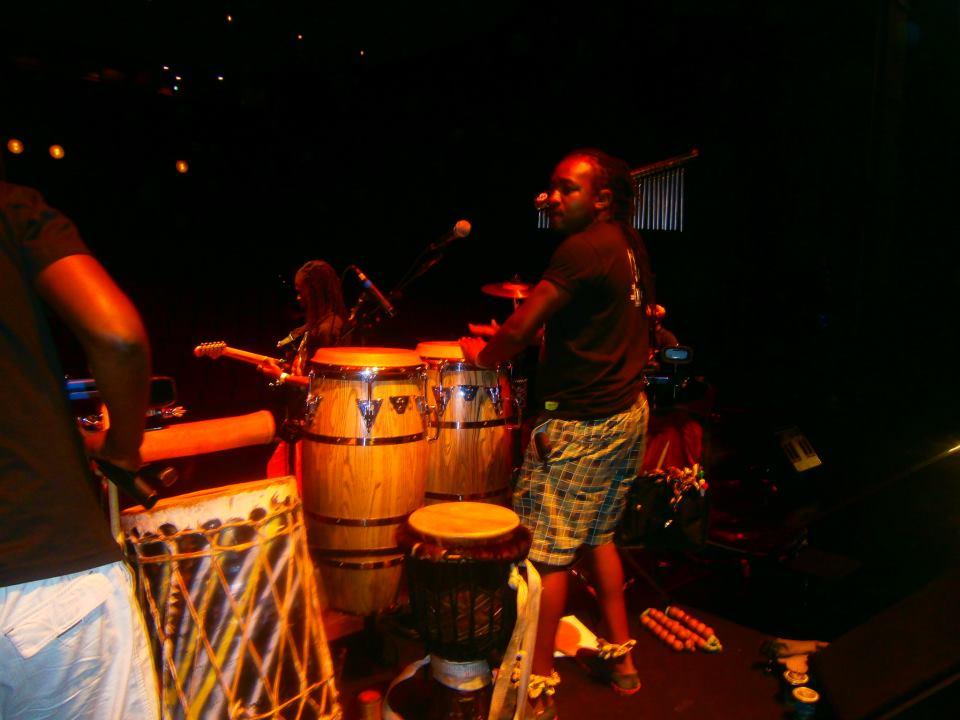
‘I will tell you of a land, now without war’, sings Matias Damásio. The culture of Angola merges with the history of the country. Music is one of the largest domestic and Semba Kizomba to the innovation that the sounds of kuduro brought to the Angolan night, make this area one of the symbols of Angola.
While the drums were elaborate for music and mixed with new sounds that warm evening in Luanda, Huambo and Cabinda, in the lyrics of Pepetela, they are also described. Fruit also of miscegenation of different ethnic, the Angolan culture walks these days hand in hand with tradition and globalization.
If you pass by the country’s museums will find craft built with the domestic wood now in the form of figurines, masks and musical instruments. Fairs will want to take pictures and recall the oil and sand paintings. In Luanda to lose by one of the art galleries will fix the eye in photographs of Paulino Damião or in parts of the artist Lino Damião.
Dance is certain presence in the streets of Angola. It is more than cultural. It’s in the blood. It’s in the blood the parties late and the good disposition. It is early on that the Angolans ‘pack’ the sounds of the earth. In Carvanal, the party invades the Avenue in Luanda or Benguela and all provinces there is a wave of color in the form of floats.
joyful and beautiful people people. Angola is known to be a country with very beautiful women, so much so that in 2011, Leila Lopes took home the title of Miss Universe for the first time.
From the interior to the coast, there are those who speak in Kimbundu, Kikongo and Umbundu, although the official language is Portuguese, although there are more than 42 dialects.
Capital:
Luanda
Population:
2449000
Area:
2.417.78 square kilometers
Climate:
dry tropical
rivers:
Bengo, Kwanza
Telephone code:
two
national language:
Kimbundo
Points of interest:Bay Mussulo
Viewpoint of the Moon
Luanda Island
Mouth of the Kwanza River
Natural History Museum
National Slavery Museum
Beaches: Hole Palmeirinhas, Cacuaco and Santiago
See Luanda
National Library of Angola
-
This reply was modified 10 years, 3 months ago by
 Congo.
 -
This reply was modified 10 years, 3 months ago by Congo.
https://virungamountains.org
Study French researchers proved that this African region is inhabited since prehistoric times. But it was in the fifteenth century that began to write in more detail the lines of development of this country.

The Portuguese Diogo Cao sailed to the territory that is now Angola. The date of arrival is not consensual: there are historians who claim that have been in 1482 and others who claim it was in 1484.
The first measure of the Portuguese was to establish an alliance with the Kingdom of Congo, which dominated the entire region. The South of this kingdom also existed the Kingdom of Ndongo and the Kingdom of Matamba, which then were to merge, to give the Kingdom of Angola, in 1559.
Paulo Dias de Novais was the first Governor of Angola. Novais sought to define this vast territory and exploit their natural resources. In 1576, São Paulo da Assunção de Luanda, the current city of Luanda, was founded.
The war that seemed to have no end
In the twentieth century, in the early 1960s, three liberation movements (UPA / FNLA, MPLA and UNITA) started an armed struggle against the Portuguese colonialism.
The Government of Portugal, led by Salazar refused to dialogue with the leaders of these organizations and continued to defend the colony to the limit. Hundreds of thousands of soldiers were mobilized for combat.
This fight lasted until the 25th of April 1974 when the Portuguese dictatorship was overthrown by the “Carnation Revolution”. The independence of Angola in 1975 did not end the war, which won international boundaries, since the three movements were supported by foreign powers, such as Russia, Cuba, South Africa, Zaire, China, USA and England.
Despite the declaration of independence, the internal conflict lasted until the early 1990s the end of April this year, the Angolan government announced that it would resume direct contacts with UNITA opposition party MPLA. The following month, UNITA officially recognized José Eduardo dos Santos as head of State. The fall of the Soviet Union, which supported the MPLA, accelerated the process of democratization in Angola and in May 1991 the government published a law authorizing the creation of new parties, putting an end to single party.
Since it began the pacification of Angola that the development indices of this country have been increasing. Peace brought to Angola the conditions that allow you currently have regional power status in Southern Africa.
https://virungamountains.org
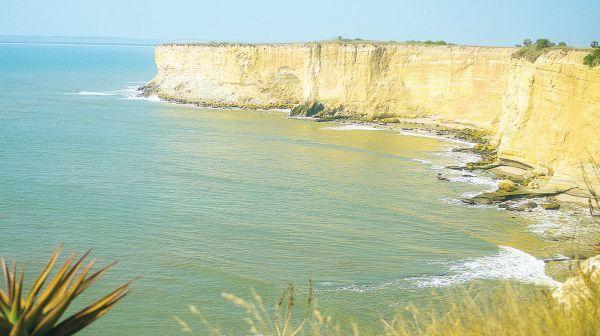
Three large cliffs dazzled by the beauty and grandeur. They are the most coveted places by tourists, both domestic and foreign. They are, above all, three brands, the most important of the beauties of Angola. Therefore, in the list of 27 candidates to the natural wonders of Angola. Each (or all) may be part of the Seven Wonders. The decision will be made in April.
The Barra do Dande, in Bengo, it is recognized for providing leisure and for its well-preserved and undeniably beautiful beaches. It is one of the natural highlights of Bengo, for its stunning cliffs.Godfather Bengo: Bangão, musician
voting code by SMS: Send 2 to the number 44567
The Slit Tundavala is the natural window of Huila facing plateau to the Namib Desert. Located a little more than two thousand meters above sea level, it is surrounded by towering cliffs of the mountains of Chela.
For its attractive beauty and characteristics, it was classified as natural and cultural landscape in 2012 by the Government. Native communities consider it also as the place where the spirits of their ancestors took refuge, closing in invisible drawers.
Godfather of Huila: Benedito Kayela, Journalist
voting code by SMS: Send 8 to the number 44567
The Moon Viewpoint is a tourist point of mandatory stop and is part of the imaginary of Angolans. She became even more famous for being the setting of the film ‘The Moon Viewpoint’, the Portuguese director Jorge António, shot in 1993 and got the special award of achievement at the Gramado Festival in Brazil. The viewpoint is the result of erosion of mountains caused by wind and rain, which succeeded the lunar landscape type that there is.
Godfather of Luanda: Eduardo Paim, singer
https://virungamountains.org
-
This reply was modified 10 years, 3 months ago by
- AuthorPosts